Best IT Jobs in 2026 – Career Opportunities, Skills, Salary & Future Growth

The IT industry has become one of the most popular career choices for students and job seekers in India. Every year, thousands of companies hire people for different technology-related roles. From software development to technical support, the IT field offers many opportunities for both freshers and experienced professionals.
One of the biggest reasons people prefer IT jobs is the career growth and salary potential. Many IT companies also provide work-from-home opportunities, flexible work environments, and chances to learn new technologies.
Even students from non-technical backgrounds are now learning IT skills and entering the industry. With proper learning and practice, it is possible to start a good career in the IT sector without having years of experience.
In this article, we will look at some of the best IT jobs in 2026, the skills required, salary expectations, and how beginners can start their careers.
- Software Developer
Software development is one of the most common and high-demand jobs in the IT industry. Software developers build applications, websites, and systems used by businesses and customers.
This role is suitable for people who enjoy problem-solving and working with technology.
Work Areas
- Mobile applications
• Websites
• Business software
• Automation systems
• Cloud-based applications
Popular Programming Languages
- Python
• Java
• JavaScript
• C++
• PHP
Freshers usually start as junior developers and improve their skills over time through projects and experience.
Average Salary
Freshers can expect salaries between ₹3 lakh to ₹6 lakh per year depending on the company and skill level.
Why It Is a Good Career
- Strong long-term growth
• High demand in many industries
• Excellent salary potential
• Continuous learning opportunities
- Web Developer
Web development is one of the easiest IT careers for beginners to start. Web developers create and maintain websites.
Types of Web Development
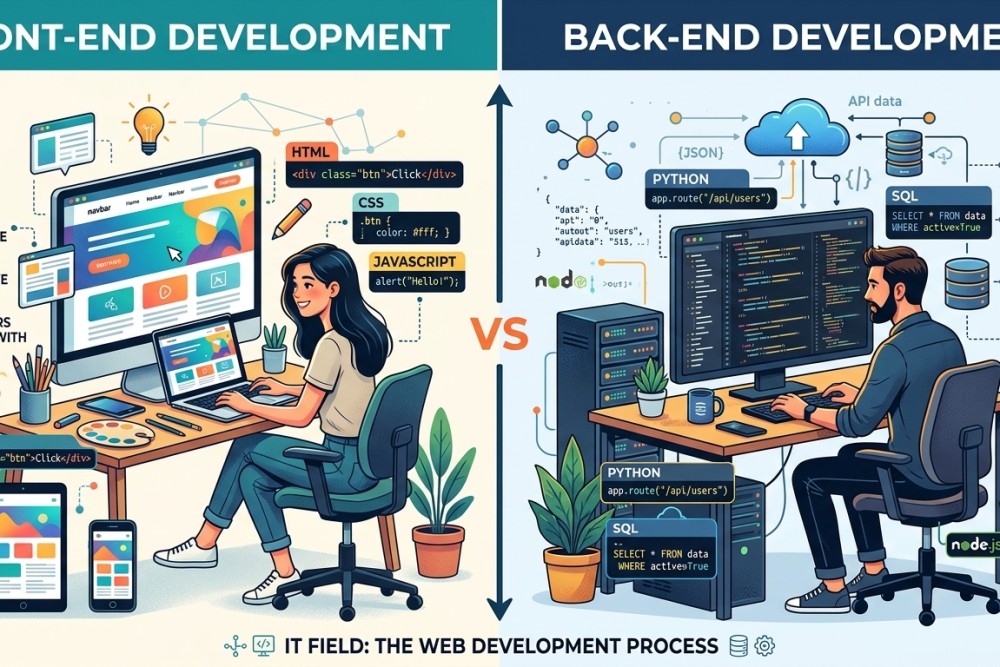
Front-End Development
Front-end developers work on the visible design of websites. They handle layouts, colors, buttons, and user interfaces.
Back-End Development
Back-end developers manage servers, databases, and website functionality.
Full-Stack Development
Full-stack developers work on both front-end and back-end systems.
Skills to Learn
- HTML
• CSS
• JavaScript
After learning the basics, many developers move to advanced technologies such as React, Node.js, or PHP.
Why Many Beginners Choose Web Development
- Easy to start
• Many free learning resources available
• Freelancing opportunities
• Remote work options
- Data Analyst
Data analysts help companies understand information and make better business decisions.
Today, businesses collect huge amounts of data. Companies need professionals who can organize and analyze this information.
Tools Commonly Used
- Excel
• SQL
• Power BI
• Google Sheets
• Python
Main Responsibilities
- Creating reports
• Tracking business performance
• Finding trends
• Organizing data
Salary Range
Freshers in data analysis can earn around ₹4 lakh to ₹7 lakh annually.
Why This Career Is Growing
Almost every industry now depends on data. This makes data-related careers highly valuable.
- Technical Support Engineer
Technical support is a good starting point for many freshers entering the IT industry.
Technical support employees help customers or company staff solve computer-related issues.
Common Responsibilities
- Solving software problems
• Helping users install applications
• Troubleshooting systems
• Handling customer complaints
Skills Required
- Basic computer knowledge
• Good communication skills
• Patience
• Problem-solving ability
Best Part About This Job
Even candidates with basic IT knowledge can enter this field and later grow into networking, cybersecurity, or system administration roles.
- Cybersecurity Specialist
Cybersecurity is becoming one of the most important fields in technology.
As online systems grow, cyber attacks and data theft are also increasing. Companies now invest heavily in security.
What Cybersecurity Professionals Protect
- Company data
• Customer information
• Servers
• Networks
• Applications
Main Responsibilities
- Monitoring threats
• Securing systems
• Preventing hacking attempts
• Conducting security checks
Skills Required
- Networking basics
• Security tools
• Ethical hacking knowledge
• Analytical thinking
Future Scope
Cybersecurity demand is expected to continue growing in the coming years.
- Cloud Computing Engineer
Cloud computing has changed how businesses manage technology infrastructure.
Instead of using physical servers, companies now use cloud platforms like:
- Amazon Web Services (AWS)
• Microsoft Azure
• Google Cloud
Cloud engineers manage these systems and ensure applications run smoothly.
Responsibilities
- Managing cloud servers
• Monitoring performance
• Handling storage systems
• Improving security
Why Cloud Careers Are Popular
Cloud professionals are highly paid because skilled workers in this field are limited compared to demand.
- Mobile App Developer
Smartphones have created huge demand for mobile applications.
Mobile app developers create apps for:
- Android devices
• iPhones
• Tablets
Popular Technologies
- Kotlin
• Java
• Flutter
• React Native
Many businesses now want their own applications, which increases opportunities for developers.
Advantages of Mobile Development
- High demand
• Freelancing opportunities
• Startup opportunities
• Remote work options
- Network Engineer
Network engineers manage communication systems inside organizations.
They ensure internet connectivity, device communication, and network security.
Main Responsibilities
- Managing routers and switches
• Monitoring networks
• Fixing connectivity issues
• Maintaining network performance
Certifications That Help
- CCNA
• CompTIA Network+
• Cisco certifications
Network engineering is suitable for people interested in hardware and networking systems.
- UI/UX Designer
UI/UX design is a creative field within the IT industry.
These professionals improve how websites and applications look and feel for users.
Main Responsibilities
- Designing layouts
• Improving user experience
• Creating prototypes
• Making websites easy to use
Popular Tools
- Figma
• Adobe XD
• Photoshop
Why This Career Is Good
UI/UX combines creativity and technology, making it ideal for people who enjoy design work.
- Artificial Intelligence and Machine Learning
Artificial Intelligence (AI) and Machine Learning (ML) are becoming popular in many industries.
These technologies are used in:
- Chatbots
• Recommendation systems
• Automation
• Image recognition
• Smart applications
AI engineers build systems that can learn and improve automatically.
Skills Needed
- Python
• Mathematics
• Data analysis
• Machine learning concepts
Although this field can be challenging, it offers excellent future opportunities.
Best IT Jobs for Freshers
Freshers often worry about experience requirements. However, many companies hire beginners for entry-level roles.
Beginner-Friendly IT Jobs
- Technical support
- Junior web developer
- Data entry with computer skills
- Software testing
- Help desk support
- Trainee software developer
Freshers should focus on improving skills instead of worrying too much about experience in the beginning.
Important Skills for IT Careers
Technical skills are important, but companies also value soft skills.
Technical Skills
- Computer basics
• Internet knowledge
• Programming
• Networking
• Software tools
Soft Skills
- Communication
• Teamwork
• Time management
• Problem-solving
• Adaptability
People who improve both technical and communication skills usually perform better in interviews and workplaces.
How to Start an IT Career
Starting an IT career does not always require expensive degrees or advanced knowledge.
A simple approach can help beginners grow steadily.
Step 1 – Learn Basics
Start with computer fundamentals and internet knowledge.
Step 2 – Choose a Field
Select one area such as web development, data analysis, or networking.
Step 3 – Practice Regularly
Work on small projects and improve daily.
Step 4 – Create Resume
Prepare a professional resume with skills and projects.
Step 5 – Apply for Jobs
Apply consistently through job portals and company websites.
Future of IT Jobs
Technology continues to grow every year. Businesses depend more on digital systems, cloud computing, automation, and online services.
Because of this, the demand for skilled IT professionals is expected to remain strong in the future.
People who continue learning and adapting to new technologies will have better career opportunities.
Conclusion
The IT industry offers many career opportunities for students, freshers, and experienced professionals. Whether someone is interested in programming, networking, data analysis, or design, there are multiple paths available in the technology sector.
Success in IT mainly depends on learning, practice, and consistency. Even beginners can build strong careers by improving their skills step by step.
Choosing the right IT field based on personal interests and strengths can help create a stable and rewarding future.