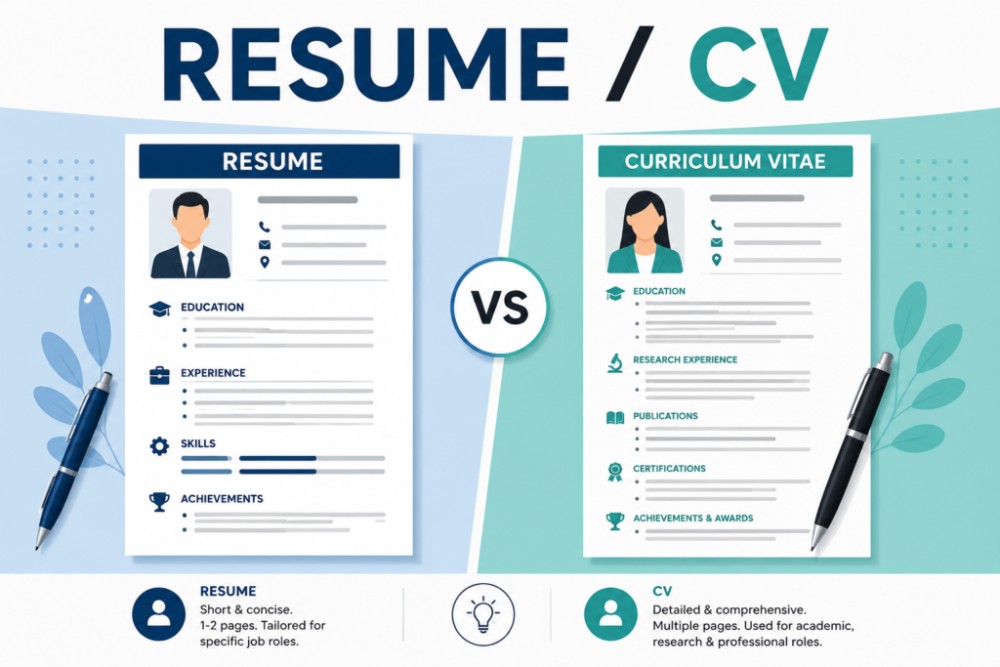
Writing a resume for the first time can feel overwhelming, especially when you do not have much work experience. But the truth is, every working professional started exactly where you are right now. A student resume does not need years of experience to be impressive. It needs to be clear, honest, and well-organized.
In this article, you will find the best resume tips for students that will help you create a resume that stands out and gets you called for interviews.
Why Your Resume Matters
Your resume is the first thing a recruiter sees before meeting you. In most companies, a recruiter spends only six to ten seconds scanning a resume before deciding whether to read it further or move on. That means your resume needs to make a strong first impression very quickly.
A well-written resume tells the employer three things.
- You are serious about the job.
- You have the basic skills and qualities they are looking for.
- You are someone worth calling for an interview.
What to Include in a Student Resume
Even if you have no work experience, there is still a lot you can include in your resume. Here are the key sections every student resume should have.
1. Contact Information
Put your full name at the top in a slightly larger font. Below that, include your phone number, professional email address, city and state, and your LinkedIn profile or GitHub link if you have one.
Make sure your email address looks professional. An email like coolboy123@gmail.com will hurt your chances. Use something like firstname.lastname@gmail.com instead.
2. Career Objective or Summary
This is a two to three line statement at the top of your resume that tells the employer who you are and what you are looking for. Keep it short, specific, and honest.
Example: "A final year B.Com student with strong communication and data entry skills, looking for an entry-level opportunity in a reputed organization where I can contribute and grow professionally."
3. Education
For students, education is the most important section. List your most recent qualification first. Include the name of your degree or course, the name of your college or university, the year of passing or expected year of completion, and your percentage or CGPA.
If you scored well in your 10th or 12th board exams, include those too. If your scores are average, you can skip them and focus on your degree.
4. Skills
List the skills that are relevant to the job you are applying for. Divide them into technical skills and soft skills.
Examples of technical skills include MS Office, Tally, HTML, CSS, Python, Photoshop, and data entry.
Examples of soft skills include communication, teamwork, time management, problem-solving, and attention to detail.
Only list skills you actually have. Do not add skills just to fill space. Recruiters will ask about them in the interview.
5. Internships or Work Experience
If you have done any internships, part-time jobs, or freelance work, include them here. Even a one-month internship is valuable to mention. Write the company name, your role, the duration, and two to three points about what you did there.
If you have no experience at all, do not worry. Focus more on your projects and achievements instead.
6. Projects
Projects are one of the most underrated sections of a student resume. If you built a website, created a presentation, worked on a college project, or completed any practical assignment, mention it here.
For each project, write the project name, a one-line description of what it was about, and the tools or skills you used to complete it.
7. Certifications
Online certifications show that you are proactive about learning. Include any relevant certifications you have completed from platforms like Google, Coursera, Udemy, NPTEL, or LinkedIn Learning.
Even a free Google Digital Marketing certificate or a Python basics certificate is worth mentioning.
8. Extracurricular Activities and Achievements
Did you participate in any college events, competitions, or cultural activities? Were you part of the student council, NSS, or any college club? Did you win any prizes or awards? Include these here.
These things tell recruiters that you are active, engaged, and willing to take initiative outside of academics.
Resume Formatting Tips for Students
The content of your resume matters, but so does the way it looks. Follow these formatting tips to make your resume easy to read.
- Keep your resume to one page. For students and freshers, one page is enough. Do not stretch it to two pages unnecessarily.
- Use a clean and simple font like Arial, Calibri, or Times New Roman. Keep the font size between 10 and 12 points for the body text.
- Use clear headings for each section so the recruiter can find information quickly.
- Keep enough white space. A resume that is too crowded is hard to read.
- Use bullet points instead of long paragraphs for work experience and project descriptions.
- Save and send your resume as a PDF file. This ensures the formatting stays the same on any device.
- Name your file properly. Use something like Firstname-Lastname-Resume.pdf instead of resume123.pdf or final-final-resume.pdf.
Common Resume Mistakes Students Make
Avoid these mistakes that can instantly reduce your chances of getting shortlisted.
- Using an unprofessional email address or an old phone number that is no longer active.
- Adding a photograph when it is not required. In most private sector jobs in India, a photo is not needed unless specifically asked for.
- Writing the entire resume in one font size with no clear sections. This makes it very hard to read.
- Copying someone else's resume and just changing the name. Recruiters can tell when a resume does not match the candidate's actual background.
- Listing hobbies like "listening to music" or "watching movies." These are too generic and add no value. Only mention hobbies that are genuinely relevant or impressive.
- Spelling mistakes and grammar errors. Always proofread your resume at least two to three times before sending it.
- Making the resume too long. Recruiters do not want to read three pages from a student with no work experience.
How to Write a Resume With No Experience
If you are a student with absolutely no work experience, here is what you should focus on.
- Write a strong career objective that clearly states your skills and what you are looking for.
- Give more space to your education, projects, and certifications.
- Mention any volunteer work, event management, or college activities you have been part of.
- Highlight soft skills like communication, leadership, and teamwork with real examples from college life.
- Complete one or two online courses and add the certifications to your resume before applying.
Remember, every recruiter was once a fresher too. A well-presented resume with honest content is always appreciated.
Should You Use a Resume Template?
Yes, using a resume template is a good idea for students. It saves time and ensures your resume looks professional. You can find free templates on Canva, Novoresume, and Microsoft Word.
However, keep these things in mind when using a template.
- Choose a simple and clean template. Avoid heavily designed templates with too many colors and graphics, especially for corporate jobs.
- Customize the template to reflect your own information. Do not leave any placeholder text.
- Make sure the template is ATS-friendly. ATS stands for Applicant Tracking System, which is software that many companies use to scan resumes before a human reads them. Simple formats work best with ATS.
Quick Resume Checklist for Students
Before you send your resume, go through this checklist.
- Is your name and contact information correct and up to date?
- Is your email address professional?
- Have you included a career objective?
- Is your education section complete with percentages and years?
- Have you listed your relevant skills honestly?
- Have you included at least one project or internship?
- Have you added any certifications or achievements?
- Is the resume one page long?
- Have you checked for spelling and grammar mistakes?
- Have you saved it as a PDF with a proper file name?
If you can tick all ten points, your resume is ready to send.
Conclusion
A great resume does not require years of experience. It requires clarity, honesty, and good presentation. As a student, your resume is your first chance to show a recruiter that you are serious, skilled, and ready to work.
Take time to build it well, proofread it carefully, and keep updating it as you learn new skills and complete new projects. Your resume will grow as you grow.
Start with what you have, do your best with it, and the right opportunity will come.