Web development is one of the most in-demand careers in the world today. Companies of all sizes need skilled web developers to build and maintain their websites and web applications. The best part is that you do not need a college degree to get started. With the right skills and dedication, anyone can become a web developer.
In this article, you will learn exactly what web development is, what skills you need, how to learn them, and how to get your first job as a web developer.
What Does a Web Developer Do?
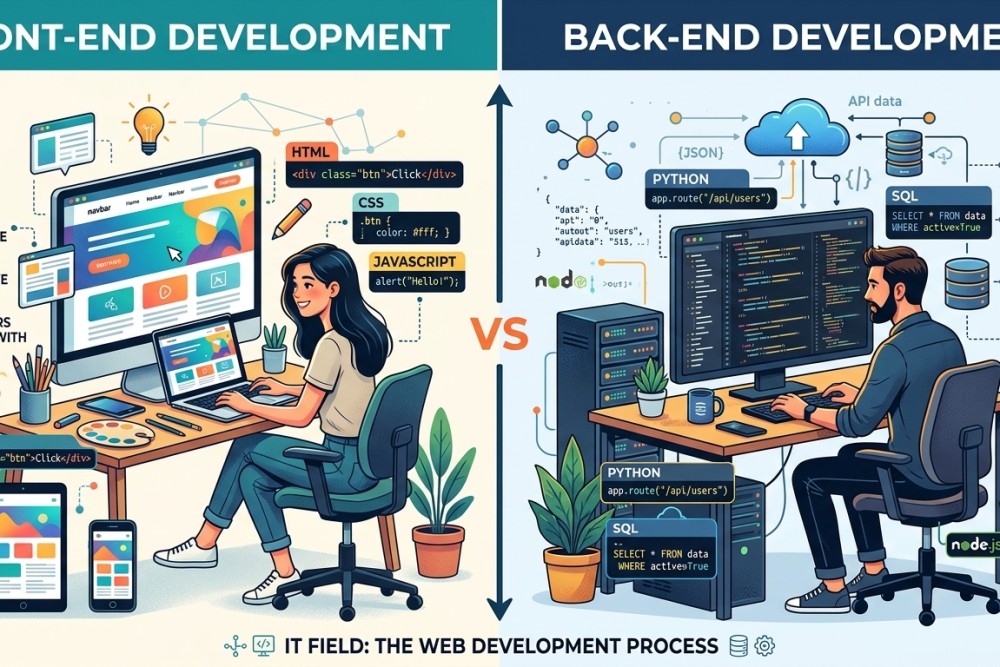
A web developer builds and maintains websites and web applications. Their work involves writing code that makes websites look good and function properly. There are three main types of web developers.
- Frontend Developer - Works on the visual side of a website. This is everything the user sees and interacts with, such as buttons, menus, images, and layouts.
- Backend Developer - Works on the server side. This includes databases, servers, and the logic that runs behind the scenes to make a website work.
- Full Stack Developer - Works on both the frontend and backend. Full stack developers can handle an entire web project from start to finish.
Most beginners start with frontend development because it is easier to learn and the results are visible immediately.
Is Web Development a Good Career in India?
Yes, web development is one of the best career options in India right now. Here is why.
- The demand for web developers is growing every year as more businesses move online.
- Freshers can earn between Rs. 2.5 lakh to Rs. 5 lakh per year, and experienced developers earn much more.
- You can work as a freelancer and earn from international clients.
- You can work from home, which gives you more flexibility and freedom.
- You do not need a specific degree. Skills matter more than qualifications in this field.
Skills You Need to Become a Web Developer
The skills required depend on which type of web developer you want to become. Here are the core skills for each path.
Frontend Developer Skills
- HTML - The basic building block of every website. It gives structure to a web page.
- CSS - Used to style and design websites. It controls colors, fonts, layouts, and spacing.
- JavaScript - Makes websites interactive. It handles things like dropdown menus, form validation, and animations.
- Responsive Design - Makes websites work well on mobile phones and tablets.
- React or Vue.js - Popular JavaScript frameworks used to build modern websites faster.
Backend Developer Skills
- Programming Language - Python, PHP, Node.js, or Java are commonly used for backend development.
- Databases - MySQL, MongoDB, or PostgreSQL are used to store and manage data.
- APIs - Understanding how to connect different systems and services together.
- Server Management - Basic knowledge of hosting, servers, and deployment.
Common Skills for All Web Developers
- Basic knowledge of Git and version control.
- Problem-solving and logical thinking.
- Ability to read and understand error messages.
- Good communication skills for working in teams.
Step-by-Step Guide to Becoming a Web Developer
Follow these steps to go from complete beginner to job-ready web developer.
Step 1. Choose Your Path
Decide whether you want to be a frontend, backend, or full stack developer. If you are just starting out, go with frontend development. It is beginner-friendly and you can see your work in action very quickly.
Step 2. Learn HTML and CSS
Start with HTML and CSS. These are the foundation of every website. HTML gives the structure and CSS makes it look good. You can learn both in four to six weeks with daily practice. Build simple web pages like a personal profile page or a basic blog layout to practice what you learn.
Step 3. Learn JavaScript
Once you are comfortable with HTML and CSS, move on to JavaScript. JavaScript is what makes websites interactive. Focus on the basics first such as variables, functions, loops, and events. Do not rush this step. JavaScript takes time to understand, and that is completely normal.
Step 4. Build Real Projects
This is the most important step. Build real projects using the skills you have learned. Start with small projects and slowly take on bigger ones. Here are some project ideas to get you started.
- A personal portfolio website.
- A to-do list app.
- A weather app using a free API.
- A simple e-commerce product page.
- A blog layout with multiple pages.
Projects show employers and clients that you can actually build things, not just watch tutorials.
Step 5. Learn a Framework
After you have a good grip on JavaScript, learn a popular framework like React. Frameworks help you build websites faster and in a more organized way. Most companies today hire developers who know at least one frontend framework.
Step 6. Learn Git and GitHub
Git is a tool that helps you track changes in your code. GitHub is where you store and share your projects online. Learning Git is not optional. Every professional web developer uses it. It also serves as your online portfolio where employers can see your work.
Step 7. Create Your Portfolio
A portfolio is a website that showcases your best projects. It is your most powerful tool when looking for a job or freelance clients. Your portfolio should include three to five of your best projects, a short about me section, your contact details, and links to your GitHub profile.
Step 8. Apply for Jobs or Start Freelancing
Once your portfolio is ready, start applying for jobs. You can look for web developer jobs on Naukri, LinkedIn, Indeed, and Internshala. If you want to work independently, you can find freelance projects on Fiverr, Upwork, and Freelancer.
Best Free Resources to Learn Web Development
You do not need to spend money to learn web development. Here are some of the best free resources available.
- freeCodeCamp - A free platform with structured courses on HTML, CSS, JavaScript, and more.
- The Odin Project - A free full stack web development curriculum for beginners.
- YouTube - Channels like Traversy Media, Clever Programmer, and Apna College have excellent free tutorials in English and Hindi.
- W3Schools - Great for quick reference and learning the basics of HTML, CSS, and JavaScript.
- MDN Web Docs - The official documentation for web technologies, maintained by Mozilla.
How Long Does It Take to Become a Web Developer?
The time it takes depends on how much time you spend learning every day. Here is a rough estimate.
- If you study for one to two hours daily, you can be job-ready in six to twelve months.
- If you study for four to five hours daily, you may be ready in three to six months.
- Joining a full-time coding bootcamp can get you job-ready in three to four months.
Consistency matters more than speed. Learning a little every day will take you much further than studying intensely for one week and then stopping.
Common Mistakes Beginners Make
Avoid these mistakes to save time and frustration on your learning journey.
- Watching too many tutorials without actually writing code. This is called tutorial hell. Always build something after every lesson.
- Trying to learn everything at once. Focus on one skill at a time and master it before moving on.
- Giving up too quickly when they face errors. Errors are a normal part of coding. Learning to fix them is part of the skill.
- Skipping the basics and jumping to advanced topics. A weak foundation will slow you down later.
- Not building a portfolio. Employers want to see proof of your skills, not just a certificate.
Web Developer Salary in India
Here is a general idea of web developer salaries in India based on experience level.
- Fresher (0 to 1 year) - Rs. 2.5 lakh to Rs. 4.5 lakh per year.
- Junior Developer (1 to 3 years) - Rs. 4 lakh to Rs. 8 lakh per year.
- Mid-Level Developer (3 to 5 years) - Rs. 8 lakh to Rs. 15 lakh per year.
- Senior Developer (5 years and above) - Rs. 15 lakh to Rs. 30 lakh or more per year.
Freelancers can earn even more, especially when working with international clients.
Conclusion
Becoming a web developer is one of the best career decisions you can make today. It is a field that rewards skill, creativity, and hard work. You do not need a degree, you do not need expensive courses, and you do not need years of experience to get started.
Start with HTML, build projects every day, stay consistent, and your first web developer job or freelance client will come sooner than you think.
The only thing stopping you is starting. So start today.