
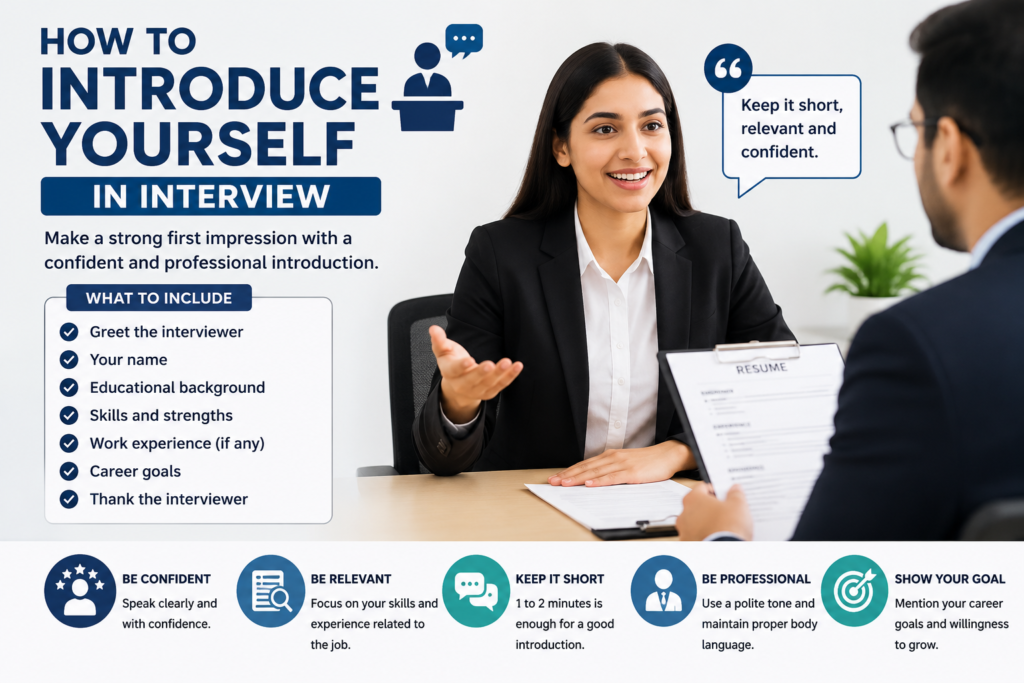
Introducing yourself in an interview is one of the most important moments during the hiring process. The way a candidate introduces themselves creates the first impression in front of the interviewer. A confident and professional self-introduction can increase confidence, improve communication, and create a positive impact from the beginning of the interview.
Many freshers and job seekers feel nervous when interviewers ask questions like:
- “Tell me about yourself”
- “Please introduce yourself”
- “Can you briefly explain about yourself?”
Although this question sounds simple, many candidates struggle to answer it properly because they either speak too much, become nervous, or forget important points.
A good introduction should be:
- clear
- professional
- simple
- confident
- relevant to the job role
The purpose of self-introduction is not to tell your entire life story. Instead, it helps interviewers understand your background, education, skills, and career goals.
- Why Self-Introduction Is Important in Interviews
Self-introduction is usually the first question asked in interviews because it helps interviewers:
- understand your communication skills
- evaluate confidence level
- know your educational background
- understand career interests
- observe personality and professionalism
A strong introduction can make the rest of the interview smoother and more comfortable.
- What to Include in Self-Introduction
A professional self-introduction should generally include:
- Your name
- Educational qualification
- Skills
- Work experience (if any)
- Career interests
- Short professional goal
The introduction should remain short and focused.
- Basic Structure of Interview Introduction
A simple interview introduction structure can look like this:
- Greeting
- Name
- Educational background
- Skills or experience
- Career interest
- Thank you statement
This structure helps candidates avoid confusion while speaking.
- Example Self-Introduction for Freshers
Here is a simple example for freshers:
“Good morning sir/madam. My name is Rahul Kumar. I recently completed my Bachelor’s degree in Computer Science from XYZ College. I have good communication skills and basic knowledge of programming and computer applications. During my studies, I worked on academic projects that improved my teamwork and problem-solving abilities. I am looking for an opportunity where I can improve my skills and grow professionally. Thank you.”
This type of introduction sounds:
- professional
- natural
- confident
without sounding memorized.
- Example Self-Introduction for Experienced Candidates
Experienced professionals can include work experience and achievements.
Example:
“Good morning. My name is Priya Sharma. I have completed my MBA in Human Resource Management and currently have three years of experience in recruitment and employee coordination. In my previous company, I handled hiring processes and employee communication activities. I enjoy working in team environments and improving workplace productivity. I am now looking for better growth opportunities where I can contribute my skills and continue developing professionally.”
- Common Mistakes During Self-Introduction
Many candidates make avoidable mistakes while introducing themselves.
Common mistakes include:
- speaking too fast
- giving very long introductions
- sharing unnecessary personal details
- using informal language
- lacking confidence
- reading memorized answers mechanically
Candidates should sound natural instead of robotic.
- Tips to Improve Interview Introduction
Practice Regularly
Practice speaking in front of a mirror or record your voice.
Keep It Short
A self-introduction should usually stay within 1–2 minutes.
Maintain Confidence
Speak clearly and maintain proper posture.
Use Simple Language
Do not use overly complicated words.
Focus on Relevant Information
Mention skills and qualifications related to the job role.
- Importance of Body Language
Body language also plays a major role during self-introduction.
Good body language includes:
- maintaining eye contact
- sitting properly
- smiling naturally
- avoiding unnecessary hand movements
Positive body language improves overall impression.
- How Freshers Can Build Confidence
Freshers often feel nervous because of lack of interview experience. Confidence improves gradually through preparation and practice.
Helpful methods include:
- mock interviews
- practicing common questions
- improving communication skills
- preparing introduction beforehand
Confidence does not mean speaking perfectly. It means speaking calmly and clearly.
- Self-Introduction for Online Interviews
Online interviews require additional preparation.
Candidates should:
- test internet connection
- use proper lighting
- reduce background noise
- maintain professional appearance
During video interviews, candidates should look at the camera while speaking instead of constantly looking at the screen.
- What Interviewers Expect
Interviewers generally expect:
- confidence
- clarity
- professionalism
- communication skills
- positive attitude
They do not expect perfect answers from every candidate, especially freshers.
A calm and honest introduction usually creates a better impression than trying to sound overly advanced.
- Final Preparation Before Interview
Before attending an interview:
- prepare your introduction
- review your resume
- research the company
- practice speaking clearly
- stay calm and confident
Good preparation reduces nervousness significantly.
Conclusion
Self-introduction is one of the most important parts of any interview because it creates the first impression. A simple, professional, and confident introduction can improve interview performance and help candidates communicate more effectively.
Candidates should focus on:
- clarity
- confidence
- professionalism
- relevant information
With regular practice and preparation, anyone can improve their interview introduction skills and perform better during job interviews.
Digital Star Jobs – Helping You Prepare for Career Success